アブラハム・ハロルド・マズロー(Abraham Harold Maslow, 1908年4月1日 – 1970年6月8日)は、アメリカ合衆国の心理学者。
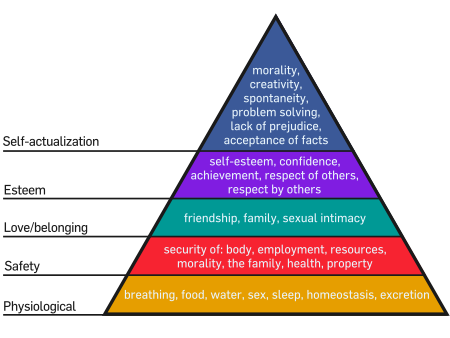
ニューヨーク州ニューヨーク市ブルックリン区に生まれる。彼は人間性心理学の最も重要な生みの親と言われている。これは精神病理の理解を目的とする精神分析と、人間と動物を区別しない行動主義心理学の間の、いわゆる「第三の勢力」として、心の健康についての心理学を目指すもので、人間の自己実現を研究するものである。彼は特に人間の欲求の階層(マズローの欲求のピラミッド)を主張した事でよく知られている[1]。マズローは人間についての学問に新しい方向付けを与えようとしたが、彼の著作はそれ以上に内容豊かなものになっている。著書、雑誌論文は100編以上におよび、アカデミックな心理学のみならず、教育や経営学のような隣接領域にまで彼の思索は及んでいる。
Abraham Harold Maslow (/ˈmæzloʊ/; April 1, 1908 – June 8, 1970) was an American psychologist who was best known for creating Maslow’s hierarchy of needs, a theory of psychological health predicated on fulfilling innate human needs in priority, culminating in self-actualization.[2] Maslow was a psychology professor at Brandeis University, Brooklyn College, New School for Social Research, and Columbia University. He stressed the importance of focusing on the positive qualities in people, as opposed to treating them as a “bag of symptoms”.[3] A Review of General Psychology survey, published in 2002, ranked Maslow as the tenth most cited psychologist of the 20th century.[4]